Understanding the Used Car Bill of Sale: A Crucial Document for Business Owners
In the fast-paced world of automotive commerce, a used car bill of sale stands out as an indispensable tool for business owners. This legal document serves as a formal agreement between a buyer and a seller during the sale of a used vehicle, acting not only as proof of the transaction but also as a safeguard against potential legal or financial disputes in the future. With the increasing number of used cars being bought and sold, understanding the importance of this document cannot be overstated.
Imagine finally closing a lucrative deal on a used vehicle, only to face unanticipated issues later on. Without a bill of sale, disputes can arise over ownership, payment terms, or even the vehicle’s condition. Business owners often deal with multiple transactions in a short period, increasing the likelihood of errors or misunderstandings. Having a bill of sale ensures that all details – such as the vehicle identification number (VIN), sale price, and buyer and seller information – are clearly outlined and agreed upon. It helps mitigate risks associated with miscommunication and protects both parties involved in the sale.
Moreover, the used car bill of sale serves as a protection mechanism for the seller. It effectively releases them from liabilities associated with the vehicle after the transaction is completed, ensuring that any future issues concerning the car do not fall back on them. This document is essential for maintaining transparency and building trust between business partners and clients.
For those eager to delve deeper into this topic, you can learn more about the process of selling your junk car for cash, which often requires a bill of sale to finalize transactions smoothly.
In conclusion, a used car bill of sale is more than just paperwork; it’s a vital instrument for ensuring that automotive sales are conducted fairly and legally. Understanding how to utilize this document effectively can save business owners from headaches down the line while fostering trust in the automotive transaction process.
Essential Items to Include in a Used Car Bill of Sale
When drafting a bill of sale for a used car, it’s crucial for business owners to ensure that all necessary details are included. This not only protects both parties involved in the transaction but also establishes a clear record of the sale. Below is a list of essential items that should be incorporated into the bill of sale:
- Date of Sale: Clearly state the date when the transaction takes place.
- Buyer and Seller Information:
- Full names
- Addresses
- Contact details
- Vehicle Description:
- Make, model, and year of the vehicle
- Vehicle Identification Number (VIN)
- Odometer reading at the time of sale
- Purchase Price: Indicate the agreed-upon price for the vehicle.
- Payment Method: Specify how the payment will be made, e.g., cash or check.
- Signatures: Ensure that both the buyer and seller sign the document to validate the sale.
- Disclosure of Liens or Loans: Any existing liens on the vehicle should be disclosed to avoid future complications.
For further insights on selling used cars, you can learn more about the process or check out specific guidelines related to your state regulations.
Legal Considerations for a Used Car Bill of Sale
When drafting a used car bill of sale, business owners must be aware of several legal factors that contribute to a legally sound transaction. Understanding these components can protect both the buyer and seller and ensure the sale complies with local laws.
1. Identification of Parties
The bill of sale should clearly identify both the buyer and seller. This includes full names, addresses, and contact information, ensuring there is no confusion about the parties involved in the transaction.
2. Vehicle Details
An essential part of the bill of sale is detailed information about the vehicle. This should include:
- Make and model: The brand and type of the vehicle.
- Year: The model year of the vehicle.
- VIN: The Vehicle Identification Number, which is crucial for tracking the vehicle’s history.
- Odometer reading: The mileage at the time of sale, which can affect the vehicle’s value and condition understanding.
3. Purchase Price
The document must clearly state the agreed-upon purchase price. This protects both parties by documenting the financial aspect of the transaction.
4. As-Is Clause
Many bills of sale will include an “as-is” clause. This means the vehicle is sold in its current condition, and the seller does not provide any warranties regarding the vehicle’s performance or condition. It is crucial for buyers to understand this aspect as it limits their recourse if issues arise post-sale.
5. Signatures
To make the bill of sale legally binding, it must be signed by both parties. While not always required, having the document notarized adds an extra layer of legal protection, verifying the identities of those involved.
6. State Requirements
Legal requirements for a bill of sale can vary significantly from one state to another. Business owners should check local regulations and ensure compliance, which may include specific forms, witness signatures, or filing requirements. For instance, some states may require specific disclosures, such as a safety inspection certificate or emissions test results.
In summary, attention to detail in the drafting of a used car bill of sale can prevent legal issues later. It is often wise to consult legal advice when creating or signing such documents to ensure all legal requirements are met. For more insights on selling vehicles, check out our guide on selling your junk car for cash.
Moreover, understanding the value of the car being sold can help in negotiations; for more information, explore used cars value resources to assist you in this process.
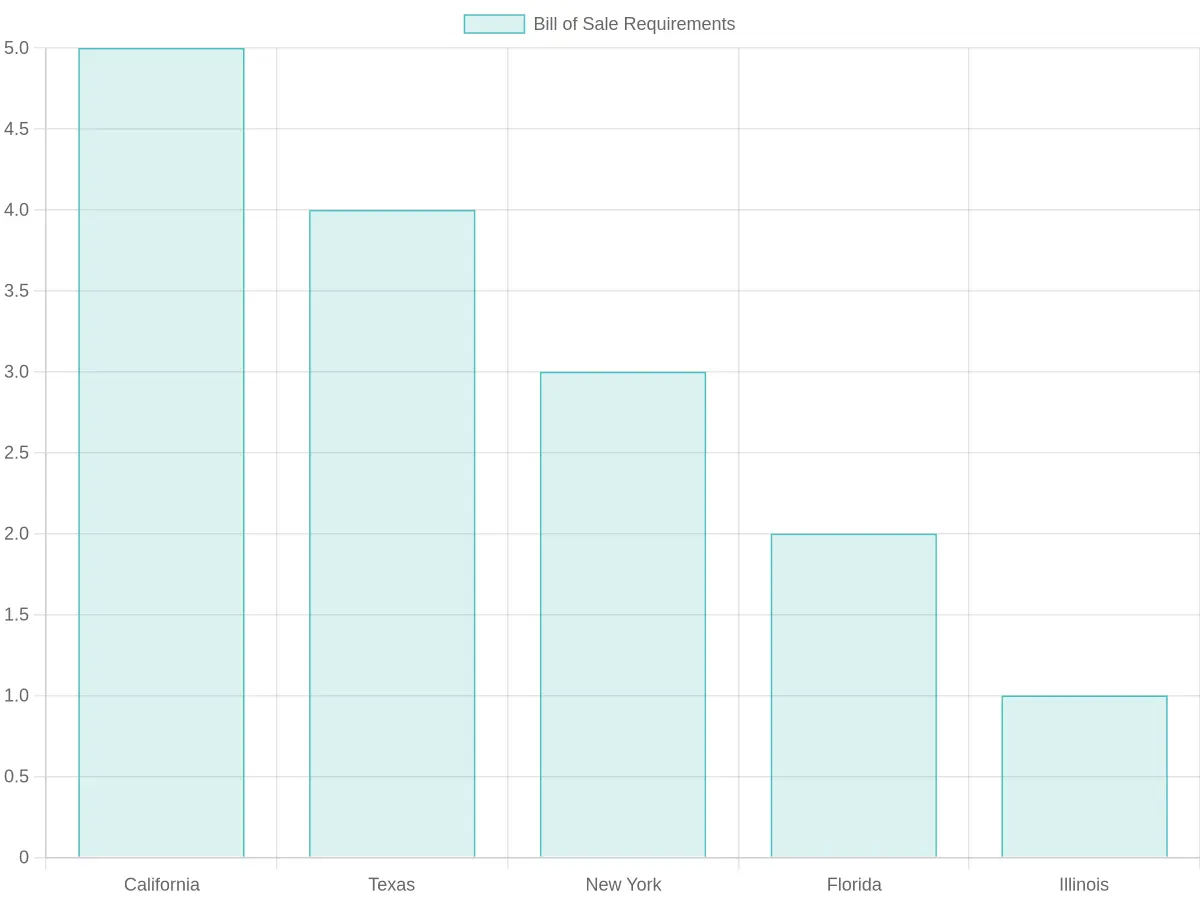
Comparison of Used Car Bill of Sale Requirements by State
| State | Buyer & Seller Information | Vehicle Details Requirement | Date of Sale Required | Notarization Required |
|---|---|---|---|---|
| California | Yes | Yes | Yes | No |
| Texas | Yes | Yes | Yes | No |
| New York | Yes | Yes | Yes | Yes |
| Florida | Yes | Yes | Yes | No |
| Illinois | Yes | Yes | Yes | No |
Visual Representation
Here’s a visual representation of the requirements for used car bills of sale across various states:
For further details on selling vehicles, check our Ultimate Guide to Selling Your Junk Car for Cash and key insights on buying used cars for businesses.
The Risks of Not Using a Bill of Sale
A bill of sale is a crucial document in the sale of used cars that provides protection to both buyers and sellers. Failing to utilize this important paperwork can expose business owners to various liabilities and risks. Here are some of the potential consequences:
1. Legal Protection
Without a bill of sale, you may lack legal documentation confirming the sale. This absence can lead to disputes over ownership, particularly if issues arise after the transaction. For instance, if a car is sold but the buyer later claims they never received it, the seller may find it challenging to prove otherwise.
2. Transfer of Liability
When a car is involved in an accident or legal matter post-sale, the lack of a bill of sale complicates proving that you are no longer the owner. This situation could leave you financially liable for accidents or injuries, which could have been avoided with proper documentation. Essentially, without a bill of sale, you risk being drawn back into legal issues associated with a vehicle you no longer own.
3. Proof of Sale
A bill of sale serves as proof of the transaction. In the absence of this document, proving the legitimacy of the purchase can be problematic, especially during vehicle registration or if the seller turns out to be fraudulent. Without clear records, you may face difficulties when trying to attain legal ownership.
4. Condition Acknowledgment
Typically, a bill of sale includes specifics about the vehicle’s condition at the time of sale. Without this written acknowledgment, buyers might find it challenging to dispute claims made regarding the vehicle’s condition. If issues arise with the vehicle post-sale that were not disclosed, the lack of a bill can complicate potential claims against the seller.
Financial Implications
In addition to legal challenges, not having a bill of sale can lead to significant financial implications. It can make it more difficult for business owners to tackle tax assessments since it proves legitimate transactions, increasing the risk of unforeseen penalties.
By understanding these risks, business owners can appreciate the importance of having a bill of sale for used car transactions. This document not only protects individuals involved in the sale but also fosters a more trustworthy and transparent business environment. To dive deeper into the proper processes for documenting car sales, learn more about selling your junk car for cash.

Steps to Complete a Used Car Sale with a Bill of Sale:
- Gather Necessary Documents
- Title
- Registration
- Bill of Sale
- Set a Sale Price
- Research Vehicle Value (Consider using tools like Edmunds for used car values)
- Advertise the Car
- Online Platforms
- Local Listings
- Meet Potential Buyers
- Arrange Safe Meetings
- Negotiate the Price
- Be Firm but Fair
- Complete the Bill of Sale
- Fill in Details, Payment Method
- Finalize the Transaction
- Transfer Title, Handover Keys
- Remove Listing Post-Sale
These steps can help ensure that your used car sale goes smoothly and legally, protecting both you and the buyer.
The Importance of a Bill of Sale in Used Car Transactions
-
Legal Protection: Business owners emphasize the importance of a bill of sale for protecting their legal rights in any transaction. It serves as a written contract that details the terms of the sale and protects both the seller and buyer from potential disputes. This legal assurance is crucial, especially when significant sums of money are involved.
-
Proof of Sale: When selling a vehicle, the bill of sale acts as proof of the transaction. It records key details such as the vehicle identification number (VIN), make and model, sale price, and the names and signatures of both parties. This documentation can be invaluable if issues arise regarding the ownership or condition of the vehicle post-sale.
-
Transparency in Transactions: Business owners often find that having a bill of sale increases transparency during the transaction process. It makes the terms clear and ensures that both parties are aware of their rights and responsibilities. This transparency fosters trust, which is particularly important in the used car market where buyers may have concerns about hidden defects or previous damages.
-
Record Keeping: A bill of sale also aids in record keeping for both buyers and sellers. For the seller, it provides a record of the sale for tax purposes or for future reference. For the buyer, it serves as proof of ownership, which must be presented when registering the vehicle with the Department of Motor Vehicles (DMV).
-
Standardization: Many business owners recommend utilizing standardized bills of sale. These templates ensure that all necessary information is included and reduce the possibility of a missed detail that could lead to problems down the line. Standardized forms are often more trusted by buyers, who may feel more confident in a well-documented process.
Conclusion
While specific testimonials from business owners were not available, the consensus among automotive sales professionals is clear: using a bill of sale not only protects their interests but also contributes to smoother, more transparent transactions. It’s advisable for business owners in the used car market to adopt and consistently use a bill of sale to facilitate their sales processes efficiently.
For more insights into selling used cars, you could explore our ultimate guide to selling your junk car for cash, which can provide valuable information on best practices in the used car market.
Conclusion
In summary, the used car bill of sale is a fundamental document that every business owner should utilize when engaging in the purchase or sale of a vehicle. Its importance cannot be overstated as it serves multiple vital functions that safeguard both financial and legal interests.
First and foremost, a bill of sale provides legal protection. It acts as a receipt for the transaction, ensuring both the buyer and seller have a clear record of the sale that includes details about the vehicle, the sale price, and the conditions of sale. This proof of ownership and transaction terms is invaluable if disputes arise in the future.
Furthermore, for business owners, asset tracking is crucial. The bill of sale helps manage and document every vehicle in a company’s inventory, which is essential for accounting and accounting purposes. Having a well-organized record assists in maintaining financial transparency and can be beneficial during audits.
Additionally, when tax season arrives, having a used car bill of sale is critical. It may be necessary to substantiate business expenses related to vehicle purchases, thereby ensuring business owners can maximize their allowable deductions. This can significantly impact the overall financial health of a business.
Equally important is the transfer of liability. The bill of sale clearly delineates the responsibility for the vehicle’s condition and any potential liabilities associated with it. This protection is vital, particularly in the event of accidents or legal disputes post-sale. By properly transferring liability, business owners can mitigate risks associated with their transactions.
In conclusion, a used car bill of sale is not just a procedural formality; it’s a significant document that reinforces the professionalism and accountability of business transactions. By understanding and utilizing this document effectively, business owners can enhance their operational efficiency and legal compliance. For further insights on vehicle transactions and ensuring reliable practices, learn more about buying used cars for businesses.
Moreover, understanding the nuances of vehicle taxation can ease financial planning for your business, helping you stay ahead in managing your operational expenses efficiently.
Importance of Documentation in Vehicle Transactions
Documentation is crucial for several reasons:
- Legal Protection: Provides legal proof and safeguards against disputes.
- Ownership Transfer: Necessary to facilitate the legal transfer of ownership.
- Financial Transactions: Enhances transparency in financial dealings.
- Future Resale Value: Clear documentation increases the vehicle’s resale value.
“Proper documentation is vital in vehicle transactions as it serves as a legal proof of the agreement between buyer and seller. It outlines essential details such as the purchase price, vehicle identification number (VIN), and any disclosures about the vehicle’s condition. This thorough documentation not only protects both parties legally, allowing for smoother ownership transfer and financial transparency, but also increases the vehicle’s future resale value.”
For more insights into selling vehicles, you can learn more about our guide on selling junk cars for cash.
Download Your Customizable Bill of Sale Template Today!
As a business owner in the automotive industry, securing a smooth and transparent transaction is critical for both you and your customers. Whether you’re buying or selling vehicles, having a reliable Bill of Sale template ensures that you have all the essential details documented correctly. This not only helps protect your interests but also builds trust with your clients, facilitating better relationships in the long run.
Our customizable Bill of Sale template is designed specifically for automotive transactions, providing you with the precise language and structure needed to make your sales processes seamless. With just a few clicks, you can tailor the template to fit your unique needs, ensuring compliance with local regulations and mitigating potential disputes.
Why You Should Download Our Template:
- Easy Customization: Modify the template to align with your specific transaction details.
- Professional Appearance: Present a formal document that enhances your business credibility.
- Protect Your Interests: Document essential terms, conditions, and vehicle details to avoid misunderstandings.
Don’t miss out on this opportunity to simplify your car sales process. Download our Bill of Sale template now and take the first step towards hassle-free transactions! Need more insights on selling vehicles? Check out our ultimate guide to selling your junk car for cash to get started!