
In today’s competitive marketplace, understanding the trade-in value of used cars is not just an option; it’s an essential aspect of operational strategy for business owners involved in the automotive industry. Whether you run a dealership, a car rental service, or a fleet management operation, recognizing the monetary worth of trade-ins can significantly enhance your profitability and customer relations. This article delves deep into the nuances of used car trade-in values, exploring how they affect your bottom line and operational efficiency. By grasping the dynamics at play, you’ll be better equipped to make informed decisions that can lead to increased revenue and improved customer satisfaction. Learn how to assess trade-in values, the factors that influence these prices, and practical tips to maximize your returns. Furthermore, this guide will provide a pathway to understanding the myriad of options available for turning trade-ins into financial assets, ensuring you stay ahead in this evolving industry. Explore more on selling cars for cash and learn about the ultimate guide to selling used cars as you navigate the intricacies of used car trade-ins.
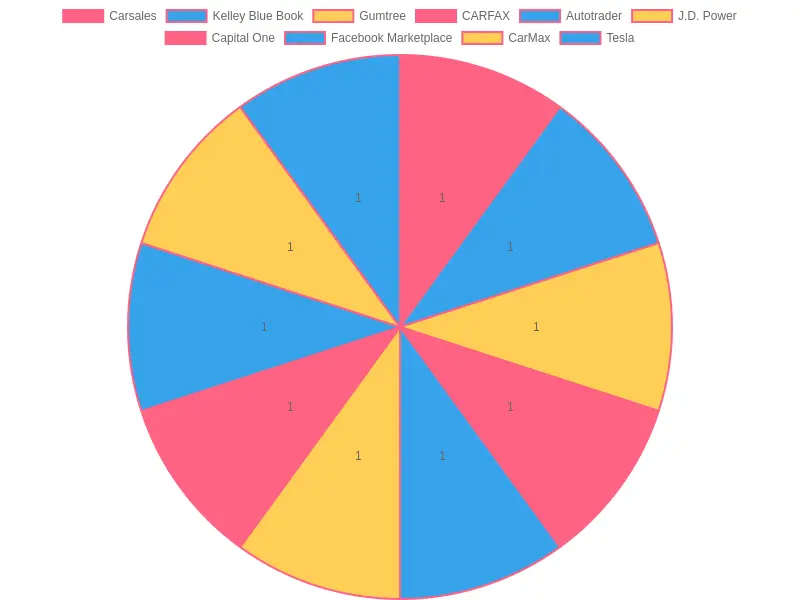
Understanding How Trade-In Values Are Determined for Used Cars
Determining the trade-in value of a used car is a nuanced process involving several critical factors. For business owners considering trading in vehicles, understanding these elements can significantly enhance negotiation power and ensure a fair deal.
Key Factors Affecting Trade-In Value
- Condition of the Vehicle
- Exterior: Scratches, dents, and rust can severely decrease a vehicle’s value. A well-maintained exterior retains more value.
- Interior: The condition of the seats, dashboard, and trim also plays an important role. Stains, tears, or odors can significantly detract from value.
- Mechanical Condition: A vehicle’s running condition, including engine performance, brakes, and transmission, is assessed. Issues here can lead to a lower trade-in offer.
-
Mileage
A car’s mileage is one of the most influential factors. Generally, the lower the mileage, the higher the trade-in value. For instance, vehicles that have been driven significantly less than average (12,000 to 15,000 miles per year) are more desirable and can fetch better offers. -
Market Demand
The current market demand for specific makes and models can greatly influence trade-in values. For example:
- Vehicles in high demand like SUVs and trucks might command higher values.
- Economic factors, such as fuel prices, can shift buyer interest and, consequently, vehicle demand.
- Vehicle History
- Accidents: Cars that have been in accidents may suffer in value, especially if they’ve had significant repairs.
- Service Records: A well-documented maintenance history can assure buyers and increase trade-in value.
- Model Year and Brand
- Newer models typically have higher values. Luxury and high-demand brands often retain their value better than economy models.
- Certain brands might depreciate faster depending on market trends.
Tools and Resources for Finding Trade-In Values
Business owners looking to evaluate their trade-in vehicle can leverage various online tools and resources:
- Websites like Kelley Blue Book provide accurate and up-to-date trade-in values based on various data points including region and vehicle condition.
- Edmunds also tracks used car values and allows sellers to see how their specific vehicle models are performing in the market, offering insights on current trends and historical data. Check it out here.
Tips for Maximizing Trade-In Value
- Clean and Maintain: Ensure the vehicle is thoroughly cleaned and well maintained before appraisal. Fetching minor repairs done can also prove beneficial.
- Gather Documentation: Have all service records, titles, and other important documents ready during negotiations.
- Research Beforehand: Familiarize yourself with your car’s market value to understand what is reasonable during negotiations. Knowing the value range can help avoid unfair offers.
Conclusion
Understanding how trade-in values for used cars are determined can provide business owners with the insight needed to navigate the process effectively. Factors such as vehicle condition, mileage, and market demand significantly affect trade-in values, making it essential to be well informed before entering negotiations. For further information on successfully selling and trading a vehicle, you may find our ultimate guide useful!
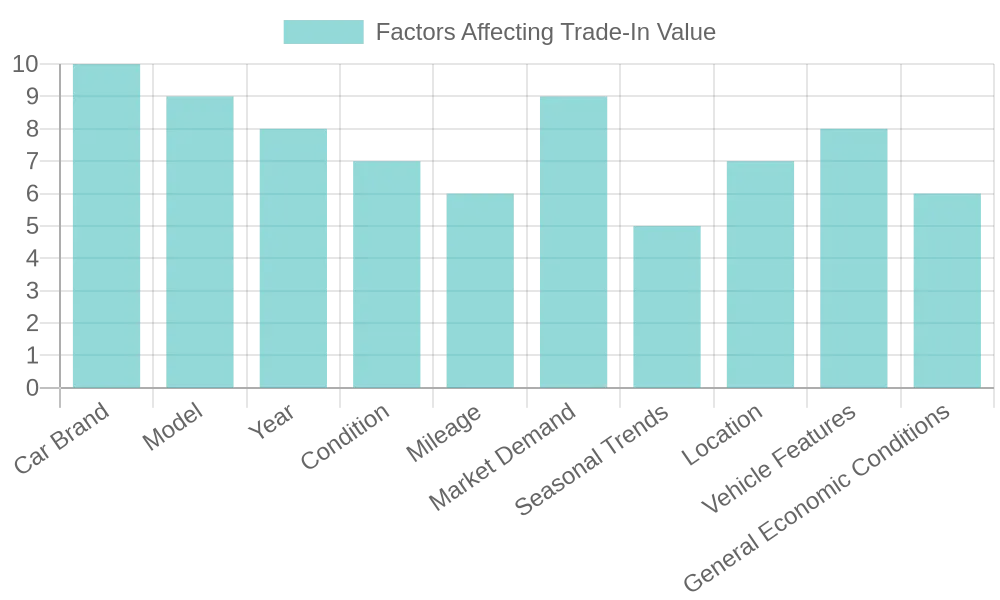
Factors Affecting Trade-In Value of Used Cars
Understanding the factors that influence the trade-in value of used cars is essential for business owners looking to maximize their investment. Here are the key elements:
- Car Brand: Different brands hold their value differently; luxury brands might depreciate slower than economy brands.
- Model: Certain models are more in demand, affecting their value positively.
- Year: Newer cars typically have higher trade-in values, but depreciation varies per model and brand.
- Condition: The better the condition, the more value it retains; wear and tear significantly decrease worth.
- Mileage: Lower mileage usually leads to higher trade-in values, indicating less overall wear.
- Market Demand: Demand fluctuates based on current trends and supply shortages.
- Seasonal Trends: Some vehicles perform better at different times of the year (e.g., 4WD in winter).
- Location: Geographic demand can impact trade-in values.
- Vehicle Features: Advanced tech and safety features can augment the vehicle’s worth.
- General Economic Conditions: A strong economy typically leads to higher values as buyers have more purchasing power.
For more insights, you can check out this guide on car trade-ins and learn about market conditions impacting car value.
Factors Affecting Trade-In Value Chart
Current Statistics on Used Car Trade-In Values (2023)
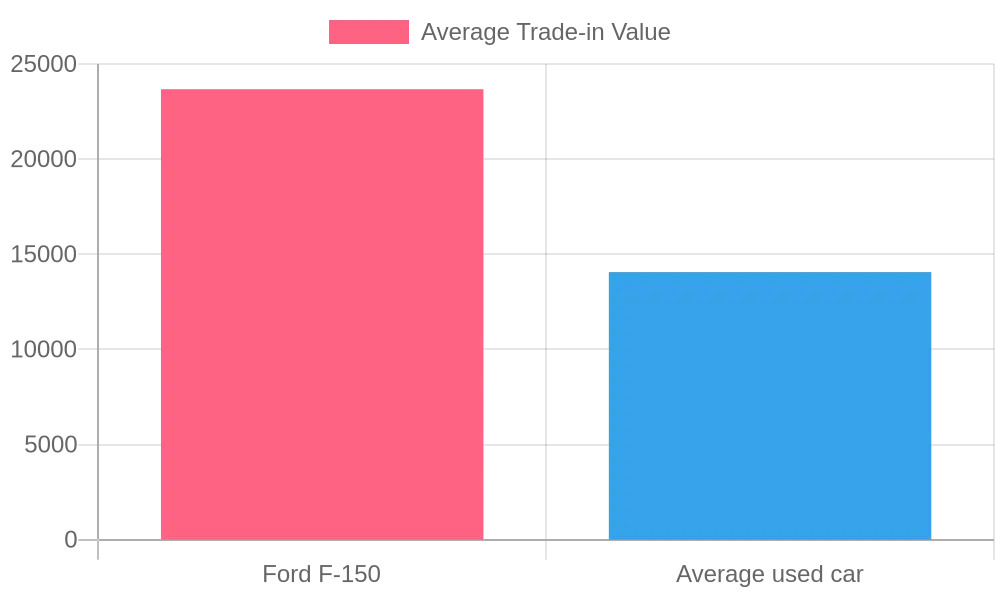
The used car market in 2023 has exhibited notable trends in trade-in values due to changing demand and supply dynamics. Here, we summarize the average trade-in values for various car types, giving businesses insights into the current landscape of used car transactions.
Average Trade-In Values by Car Type
| Car Type | Average Trade-in Value |
|---|---|
| Ford F-150 | $23,677 |
| Average used car | $14,066 |
- For more details on specific models, you can read about the average trade-in values by Kelley Blue Book and explore insights from Capital One.
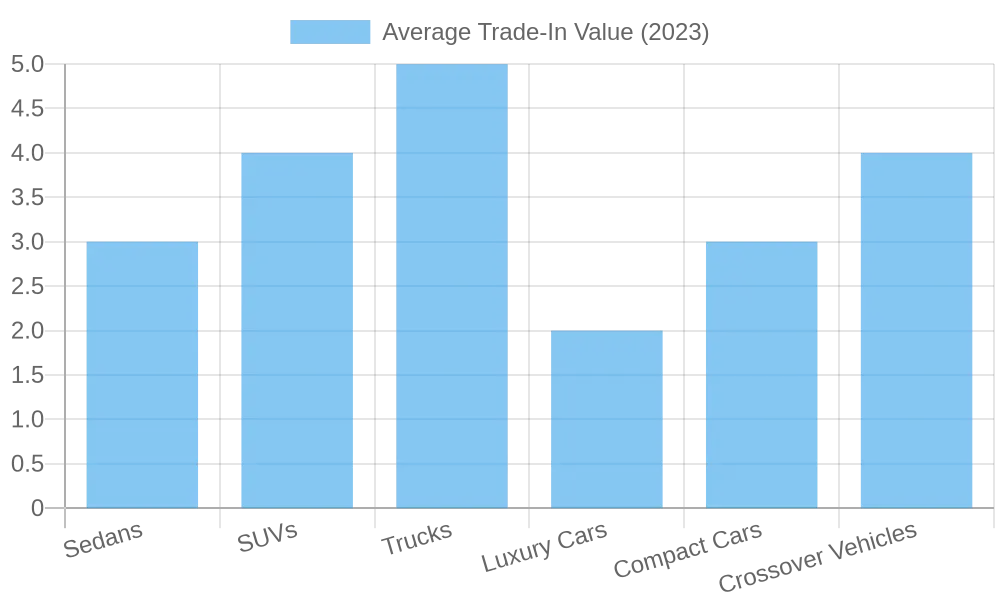
In addition to individual models, here are highlights of average trade-in values segmented by vehicle type:
| Vehicle Type | Average Trade-In Value (2023) | Source |
|---|---|---|
| Sedans | $$ | Capital One |
| SUVs | $$$ | Kelley Blue Book |
| Trucks | $$$$ | CARFAX |
| Luxury Cars | $$ | NADA |
| Compact Cars | $$$ | Edmunds |
| Crossover Vehicles | $$$$ | U.S. News |
As observed, the average trade-in value for sedans and luxury cars tends to be lower compared to SUVs and trucks, reflecting market preferences and demand patterns.
This data provides a comprehensive overview for business owners looking to navigate the used car market effectively, ensuring that they remain informed of the latest trends and values for trade-ins.
| Make | Model | Year | Average Trade-In Value |
|---|---|---|---|
| Tesla | Model Y | 2023 | $25,036 – $36,336 |
| Toyota | 4Runner | 2023 | Estimated 60% of MSRP |
| Honda | CR-V | 2023 | Estimated 50% – 55% of MSRP |
| Ford | F-150 | 2023 | Average $41,679 |
| Chevrolet | Silverado | 2023 | Average $43,176 |
When it comes to increasing the trade-in value of your used car, business owners must focus on two key elements: maintenance and presentation. Adequately caring for your vehicle and presenting it in an appealing way can significantly enhance its market value. Here are some essential practices to consider:
1. Regular Maintenance
Maintaining your vehicle not only ensures its longevity but also safeguards its value. Consistent maintenance practices can avoid costly repairs down the line, and they reflect positively on the vehicle’s condition when it’s time for a trade-in.
-
Routine Oil Changes: Regular oil changes keep the engine functioning smoothly. Follow the manufacturer’s guidelines regarding intervals, as a well-functioning engine is a significant asset during evaluation.
-
Tire Care: Ensure that your tires are properly inflated and have sufficient tread. Rotate your tires regularly to promote even wear, as dealerships often assess tires when determining trade-in value.
-
Brake System Inspection: Keeping the brake system in good shape is crucial. A simple brake pad replacement can go a long way in making the car seem more reliable and safe to potential buyers.
-
Fluid Checks: Regularly inspect and top up all essential fluids (coolant, brake fluid, transmission fluid). This is particularly important as it prevents overheating and other issues that could arise during the dealership inspection.
-
Documented Service History: Keep a detailed record of all maintenance work and repairs. This documentation reassures potential buyers about the vehicle’s reliability, which can positively influence trade-in offers.
2. Exterior and Interior Presentation
First impressions matter significantly when trading in a used car. A well-presented vehicle can easily sway the dealer’s assessment.
-
Thorough Cleaning: Both the exterior and interior should be thoroughly cleaned, including a wash, wax, and detailed interior cleaning. Stains, odors, and debris can seriously deter potential buyers and reduce offers.
-
Paint Touch-ups: Address minor scratches or dents with paint touch-ups. This prevents these imperfections from becoming negotiating points during trade-in discussions.
-
Tire Shine and Detailing: Enhancing the look of your tires and detailing the inside, including vacuuming, polishing surfaces, and even perfume for a fresh scent, can make a positive impression.
-
Freshening Upholstery: Upholstered seats should be cleaned and treated, while leather seats should receive a conditioner. This not only looks appealing but preserves material integrity, which can translate into a better offer.
3. Minor Repairs
Fixing minor issues can often yield higher trade-in values. While major repairs may not be feasible before a trade-in, addressing smaller matters is usually worthwhile.
-
Headlight and Taillight Functionality: Ensure that all lights are functional and that lenses are clean. Dim or blown-out lights can be seen as neglect and might lead to a lower trade-in value.
-
Windshield Repairs: Small chips or cracks in the windshield should be repaired. A clear windshield avoids signaling carelessness to the dealership.
4. Understanding Market Observations
Besides maintenance and presentation, it’s vital to be knowledgeable about market value and trends.
-
Market Research: Use platforms like Edmunds for a comprehensive understanding of your vehicle’s worth based on its make, model, year, and condition.
-
Stay Informed About Trends: Knowing what cars are in demand can help you market your vehicle effectively. For instance, which vehicles seem to hold their value better?
Conclusion
By implementing these maintenance and presentation best practices, business owners can maximize their used car’s trade-in value. An accurate understanding of the vehicle’s condition, paired with a strategic approach to repairs and presentation, not only helps in receiving a better offer but also enhances the overall trade-in experience. Maintaining your vehicle’s condition while embracing smart presentation strategies will lead to a more favorable outcome when it’s time to trade in.

 This chart illustrates the trends in used car trade-in values over the past five years. The fluctuations reflect the dynamic nature of the used car market, influenced by various economic factors, including economic recovery efforts, supply chain issues, and consumer demand.
For further insights and to understand more about current market conditions, you can explore the Kelley Blue Book and Edmunds for comprehensive updates on used car valuations.
In conclusion, understanding used car trade-in values is paramount for business owners looking to make informed decisions regarding vehicle transactions. The value of a trade-in can significantly affect the financial outcome when acquiring new vehicles, impacting overall profitability and cash flow. A well-researched owner is better equipped to negotiate with dealers, as many dealerships may offer lower prices to those who are uninformed about their car’s worth. Factors such as mileage, condition, and market demand play crucial roles in determining trade-in values, and owners who actively maintain their vehicles may see better returns. By leveraging resources like Kelley Blue Book and Edmunds, business owners can access timely data and insights that align with current market conditions, allowing them to maximize their trade-in value. In a market where used car prices have surged, as demonstrated by a notable increase in average values, knowing the intricacies of trade-in processes is essential for business strategy. For a deeper understanding of effective strategies in the used car market, consider exploring more about the fundamentals of trade-in values and how they specifically relate to your business goals.
For more comprehensive strategies on selling and appraising cars, check out this ultimate guide on selling your junk car.